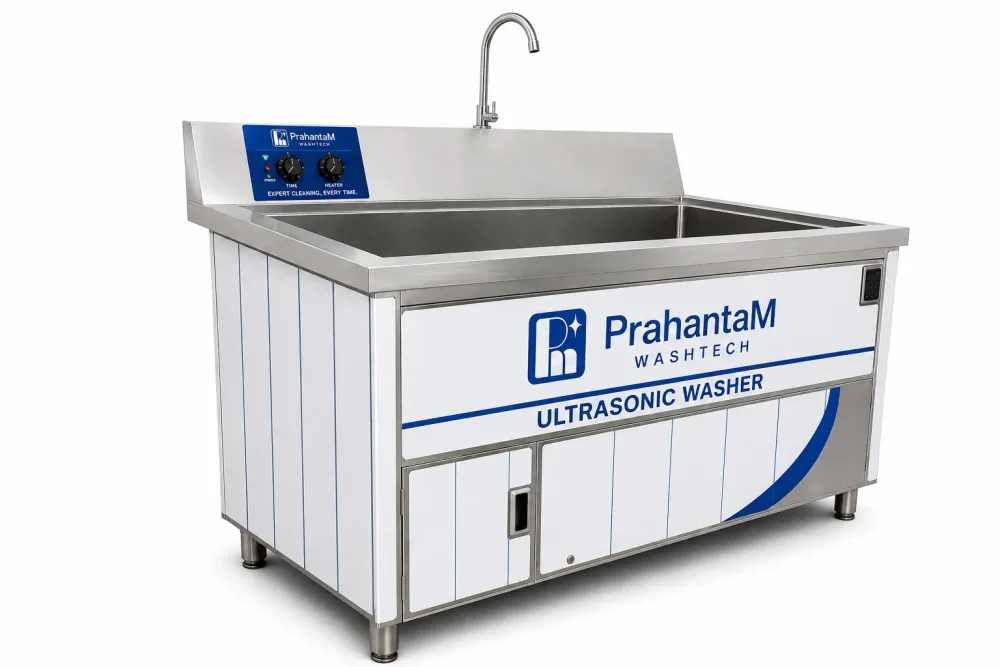
Greasy soils on utensils, kitchen tools and smallware resist quick spray cycles when geometry traps oil. The PM Washtech 15 liter ultrasonic washer combines 40 kHz cavitation, 360W ultrasonic power and 450W heating to loosen heavy films common in Indian frying, curry prep and banquet production before items return to spray lines or direct service.
This guide covers who needs 15L heating plus ultrasonic power, batch planning in hotel prep and catering commissaries, utilities and safety, chemical-light benefits versus soak tanks, maintenance, and comparison with 10L and 230L models. Prahantam manufactures in Ahmedabad with nationwide commercial support.
What 15L ultrasonic with heating solves
Heat reduces grease viscosity so cavitation energy transfers more effectively to surfaces. 360W ultrasonic power in a 15 liter volume supports larger simultaneous batches than 10L while remaining floor or bench practical in many prep rooms.
450W heating element class targets greasy soil profiles without requiring stewards to manually scrub carbonized edges on tools that should not enter abrasive pad workflows.
Still a batch machine: plan peaks by batch count, not conveyor plates per hour.
Who should shortlist the 15 liter model
Hotel main kitchens, large restaurant prep, catering commissaries, institutional dietary prep, and industrial canteen support zones washing greasy smallware daily. Choose 15L when 10L lacks heating headroom or basket volume for your grease-heavy item list.
Choose 230L when batches are continuous industrial scale with large utensil dimensions and kilowatt ultrasonic demand. Choose 10L when soils are lighter and heating is secondary.
How cavitation and heat work together
40 kHz transducers generate cavitation while heated liquid softens fat and polymerized oils. Cycle design should respect maximum temperature and detergent compatibility for each item class.
Load baskets to allow circulation; grease released into liquid must filter or change on schedule or later batches redeposit soil.
Capacity planning for greasy batches
Time trials with your worst wok tools, ladles, mesh screens and hotel inserts define realistic cycle minutes. Peak prep windows before lunch and dinner service drive tank count decisions.
Pair with hood lines so plates flow on racks while greasy tools cycle ultrasonically without cross-contaminating clean plate landing.
Hygiene and chemical-light operation
Less manual scrub chemistry reduces skin exposure and abrasion damage on stainless tools. Still use approved detergents when needed and change fluids before wash quality drops.
Verify food safety SOP for temperature limits on specific tools with plastic components.
Site requirements
Electrical supply must cover 360W ultrasonic plus 450W heating concurrently per nameplate guidance. Drain, fill, ventilation and heat-safe bench or stand are mandatory. Indian 50 Hz supply standard.
Grease aerosol near open flames elsewhere in prep requires layout discipline; ultrasonic stations belong in wet prep zones with fire policy awareness.
Operating tips for prep teams
Scrape bulk grease before tank to extend fluid life. Do not overload beyond basket line. Post maximum temperature and cycle charts after commissioning.
Assign fluid change ownership per shift lead.
Maintenance and descaling
Hard water plus heat accelerates scale. Descale on performance triggers, not calendar guesswork. Protect transducer bonds from impact during cleaning.
Prahantam support from Ahmedabad assists when heating or ultrasonic output degrades unexpectedly.
15L vs 10L and 230L
10L: 240W, four transducers, lighter soils. 15L: 360W ultrasonic, 450W heat, greasy focus. 230L: 3000W industrial, 75C class heat, hotel and catering factory volume.
Why Prahantam
Scaled ultrasonic portfolio under one hospitality-oriented brand with Indian operating context and installation guidance.
Grease-heavy Indian menus and realistic cycle design
Ghee tempering, tadka ladles, fried snack screens and banquet holding inserts accumulate films that room-temperature spray misses. The 15L combination of 360W ultrasonic action and 450W heating targets those soils when cycles are validated against your actual prep, not against demo water alone.
Veg-heavy institutional menus still produce surprising grease load from oil dressings and shallow frying. Do not assume vegetarian branding equals light soil. Item audit first, tank size second.
Fluid management at production pace
Grease release saturates wash liquid faster than light bar strainer cleaning. Define maximum batch count per fill, not only time-based change intervals. Turbidity, odor and rising foam are operational triggers stewards must authority to act on without waiting for manager approval during rush.
Skimming and filtration accessories may be advisable for high-volume sites. Discuss options during purchase so plumbing and bench space exist before go-live.
Layout between prep fry and cold line
Place the 15L station where greasy tools enter from fry and grill zones without crossing clean salad prep. Physical separation beats signage alone in audits and in daily habit.
Heat and steam from the tank affect nearby chocolate garnish or butter sheets if placed without airflow planning. Engineering review during kitchen design prevents expensive relocation later.
Staff training for commissary rotations
Contract stewarding vendors rotate quarterly in many hotels. Embed 15L SOP in vendor onboarding with photo standards of clean versus failed mesh screens. Retrain every rotation, not only at contract start.
Two certified operators per shift prevent single-person knowledge loss that shuts specialty cleaning when one employee is on leave during a conference week.
Power quality and 50 Hz supply discipline
Simultaneous 360W ultrasonic and 450W heating draw matters on shared kitchen panels already loaded with combi ovens and hood exhaust. Electrical sign-off before purchase avoids nuisance tripping that teams blame on machine quality.
Generator backup sites must confirm frequency stability under load; unstable supply can affect heating recovery times observable only during full kitchen demand.
Comparison snapshot for procurement committees
10L handles lighter batches with 240W and four transducers. 15L adds heat for grease. 230L industrial scale with approximately 3000W and heat to around 75 degrees Celsius serves factory throughput. Document why 15L is the middle tier match for your item list so committees do not default to cheapest or largest extremes.
Sample item list for 15L suitability review
Typical fits include mesh skimmers, sauce ladles, small hotel pan inserts, mixer beaters, mandoline guards, and prep tools too awkward for hood racks. Atypical fits may include large sheet pans better sent to hood lines or delicate plastic tools excluded by material policy.
Walk your stewarding room with a clipboard once before purchase. Photograph ten worst items that currently consume brush labor. Those photos accelerate Prahantam sizing conversation beyond generic brochures.
Night cleaning and morning prep handoff
Night teams often run greasy tool batches while day teams need clean strainers at 5 AM. Define who changes fluid between shifts and who signs off on tank cleanliness before breakfast prep starts. Gray zones here cause recurring blame between shifts.
Preventive maintenance calendar
Weekly interior wipe-down, scheduled descaling based on hardness tests, transducer area protection per manual, and quarterly performance check with loaded basket should appear on engineering calendars alongside hood dishwasher service.
Prahantam Ahmedabad support can recommend interval starting points; local water and duty cycle adjust them within months of live operation.
360W ultrasonic plus 450W heating in combined cycles
Operators feel heating and cavitation as one button, but maintenance staff should understand both loads on electrical panel. Heating without adequate liquid level risks element stress; cavitation without fluid change risks weak cleaning masked by hot water smell alone.
Cycle recipes for heavy curry pot inserts may run longer than light fryer baskets. Post two approved cycle times rather than one generic minute count that encourages guesswork under rush.
Grease films broken by heat still need removal from bath before redeposit. Skim visible oil when SOP demands even if liquid looks otherwise clear to casual glance.
Institutional canteen and industrial feeding scale
Factory canteens serving thousands daily produce repetitive tool soil on ladles and distribution inserts. 15L batch rhythm should align with meal wave gaps so tools return before next service line opens. Missing that alignment sends staff back to brush tubs while machine sits idle earlier shift.
Union and contractor environments need written machine access rules so ultrasonic station remains available to all shifts fairly, not hoarded by one prep clique.
Capital committee narrative template
Present item photos, current brush labor hours, near-miss audit notes, and projected batch count on 15L. Compare against 230L only if dimensions prove items exceed 15L basket routinely. Committees approve stories that connect guest safety and labor math, not jargon about kilohertz alone.
Buying checklist
List greasy items and dimensions. Estimate batches at peak. Confirm power and ventilation. Compare 230L if volume borderline. Request WhatsApp pricing from Prahantam.
Deep dive on greasy soil chemistry and 450W heating
Indian frying oils and ghee leave polymerized films that bind to stainless mesh. Heat at 450W class supports saponification and viscosity drop so 360W ultrasonic cavitation at 40 kHz can detach films faster than cold soak. Cycle design should allow enough contact time after temperature peak; rushing unload while steam still rising often means film remains on hidden mesh backside.
Stewards should inspect mesh against light after cycle, not only glance at front face facing them. Backside shadowing is classic failure mode when baskets sit flat on tank bottom blocking cavitation under mesh.
When switching frying oil supplier, revalidate cycle time once. Different smoke points and additive packages change soil behavior even when menu name unchanged.
Measuring success after ninety days live
Compare brush labor minutes, rework rate on greasy tools, and stewarding overtime during peak prep before and after 15L install. Numbers justify upgrade to leadership better than operator enthusiasm alone. If metrics flatline, revisit loading SOP and fluid change discipline before blaming hardware.
Chef feedback on tool cleanliness during service is qualitative signal. Persistent complaints about rancid wok brush or gritty ladle mean process gap remains somewhere in chain from fry station to ultrasonic landing.
After ninety days, revisit whether 230L hub makes sense for corporate expansion or whether duplicate 15L units at two prep zones beat one central walk distance.
Next step
Send soil examples and batch counts to PM Washtech for 15L confirmation and commercial pricing via WhatsApp or phone.