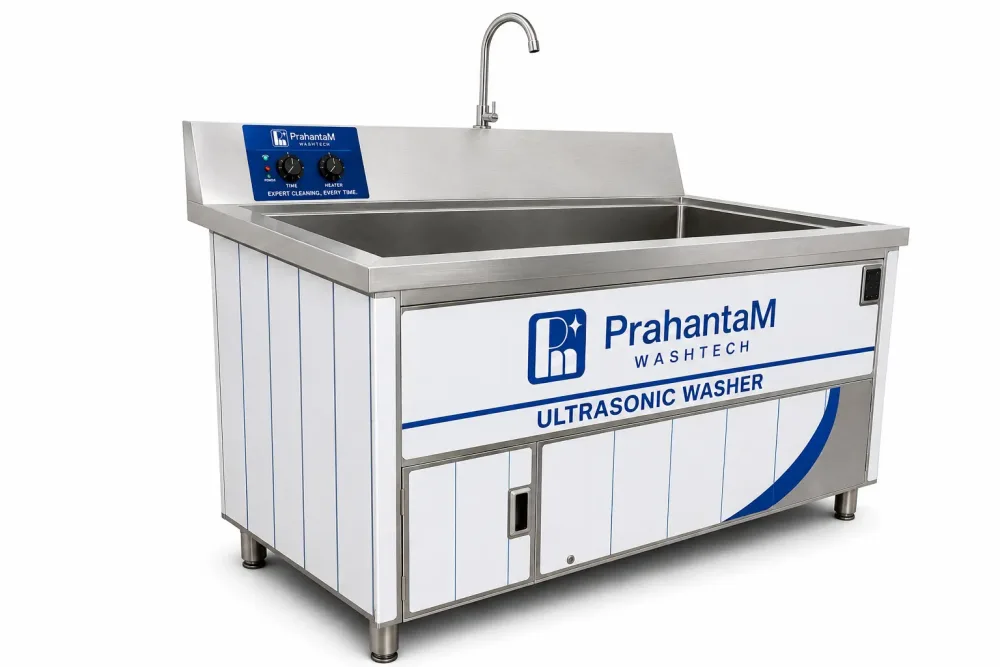
Not every kitchen needs an industrial wash tunnel to solve a precision cleaning problem. Sometimes the bottleneck is six decanters after a wine dinner, a stack of cocktail strainers, or pastry tips with clogged holes. The PM Washtech 6 liter ultrasonic washer packs 40 kHz cavitation, 180W ultrasonic power and three transducers into a compact tank for small batches in bars, cafes, offices and hotel prep niches across India.
This guide helps buyers decide when the 6L model is sufficient, how batch sizing and transducer layout affect results, what utilities and bench space are required, and how to operate and maintain the unit alongside spray dishwashers or glass washers. Prahantam provides manufacturing and support from Ahmedabad.
What the 6 liter ultrasonic unit solves
Small batches of intricate ware frustrate teams when the only options are hand scrubbing or running oversized equipment half empty. The 6L tank targets items that fit within modest dimensions and need cavitation reach without dedicating floor space to a commissary-scale machine.
Three transducers at 40 kHz distribute ultrasonic energy through the liquid volume for detail cleaning on glassware segments, cutlery, small utensils and tools when fully submerged and correctly basketed.
180W ultrasonic power classifies this model as an entry commercial batch tool, not a replacement for high-volume plate lines.
Who should choose the 6L ultrasonic washer
Select 6L when daily ultrasonic need is measured in small batches rather than continuous industrial throughput. Typical sites include specialty coffee bars cleaning portafilters and steam wand tips, hotel floor pantries, pastry sections, tasting rooms, office hospitality corners, and stewarding prep desks handling odd items rejected from hood lines.
Upgrade toward 10L or 15L when basket dimensions or batch weight routinely exceed comfortable 6L loading, or when greasy soils need more volume and heating headroom. Move to 230L only for central production scale.
If you never wash intricate smallware, invest in spray equipment first; ultrasonic is a precision supplement.
How 40 kHz cavitation works in a 6L tank
Electrical energy drives transducers to vibrate at ultrasonic frequency, creating cavitation bubbles in wash liquid that collapse against submerged surfaces. Soil loosens without abrasive pads on many glass and metal items. Cycle time depends on soil, detergent if used, and temperature of liquid at start.
Items must be oriented to eliminate air pockets. Hollow handles open downward; mesh baskets hold cutlery separated enough for water exchange.
Three transducers cover the compact footprint when load size respects tank walls and does not shield neighbors from energy paths.
Capacity planning for small batches
Define maximum item dimensions that fit safely with liquid cover above ware. Count peak batches per hour as load plus cycle plus unload. Six liters limits simultaneous volume; high frequency small batches still clear nightly needs for many bars if scheduled between rushes.
Running multiple short cycles often beats one overstuffed load that fails inspection and repeats work.
Track which shifts produce ultrasonic demand so staffing matches reality instead of assuming 24-hour need.
Hygiene and chemical-light cleaning practice
Use approved mild detergents when grease requires it; many light soils release with cavitation and heated tap water within operating guidance. Change liquid when cloudy or after defined batch counts to prevent redeposit on clean items.
Rinse with potable water when SOP requires before returning items to food contact service.
Separate ultrasonic dirty landing from clean storage visually with color coding or bench labels.
Site requirements for countertop 6L installation
Stable bench rated for weight and splash, electrical outlet matching 180W ultrasonic system requirements plus any ancillary heating on related models in the range, water fill source and drain path, and splash back protection for walls. Confirm 50 Hz supply typical in India.
Allow operator standing clearance and basket staging space; cramped back bars still need ergonomic access.
Operating tips for bar and cafe teams
Pre-rinse chunky soil from shakers and tins. Do not place incompatible materials per manufacturer list. Avoid stacking glass that rattles and chips during cavitation.
Standardize cycle duration trials during commissioning with your worst soil example, then post the chosen minute count above the tank.
Train relief staff; specialty equipment fails silently when only one bartender knows how to run it.
Maintenance for three-transducer compact units
Clean tank interior on schedule, descale if hardness deposits appear, inspect transducer area only per manufacturer guidance without damaging bonded surfaces. Report unusual noise or weak cleaning early to Prahantam support.
Document fluid change dates on a simple log sheet laminated at the station.
6L compared with 10L and 15L in the Prahantam line
10L adds capacity and four transducers at 240W for slightly larger batches. 15L adds 360W ultrasonic plus 450W heating emphasis for greasy soils. 6L wins on smallest footprint and capital for true small-batch niches.
Buying up one tier costs more bench space; buying down leaves teams running sequential micro-batches that steal labor.
Why Prahantam for 6L ultrasonic buyers
Ahmedabad-based manufacturing and commercial wash specialization mean support conversations stay practical, not theoretical. 6L buyers often first-time ultrasonic users; Prahantam orientation reduces early misuse that discredits the technology.
Tea stall and office pantry realities in India
Small footprint counters often share space with grinders, microwaves and display chillers. The 6L unit fits when item list stays disciplined: cups, small jugs, shaker tins, not full dinner plates. Buyers who respect that boundary enjoy reliable results; buyers who overload the tank chase problems.
Office facilities managers should place the washer where pantry staff already handle wet tasks, with GFCI or equivalent protection per local electrical code interpretation by qualified electricians.
Breakage control on delicate glass
Cavitation is gentler than steel wool but glasses still contact each other if rattling freely. Use manufacturer baskets or silicone dividers where available. One chipped rim discovered before load prevents cutting staff and drain blockages from glass shards.
When to graduate from 6L to 10L
Signals include waiting queues for the tank during single-shift rush, repeated split loads for one prep batch, or heating demand on greasy tools beyond 6L comfort. Prahantam upgrade path within the same brand simplifies procurement records for chain outlets standardizing vendors.
180W power budget and electrical hygiene
Three transducers sharing 180W ultrasonic budget mean loading discipline directly affects perceived power. Treat rated wattage as cooperative energy across the bath, not magic per glass. Stagger oversized items into separate cycles when inspection fails combined load.
Label the dedicated outlet at breaker panel so maintenance staff do not reassign circuit during unrelated kitchen repairs, leaving bar team confused when machine underperforms after weekend electrical work.
Documentation for franchise and brand standards
Franchise audits may ask how specialty items are cleaned. A one-page SOP referencing 40 kHz ultrasonic at 180W with three transducers and defined cycle minutes satisfies auditors better than informal sink habits.
Three transducer coverage patterns
Three transducers in 6L geometry mean triangular energy emphasis zones. Center-loaded baskets often outperform edge-crammed loads that leave one corner under-served. Rotate basket orientation between cycles when cleaning symmetric sets of small jugs to even wear on staff habit and cleaning outcome.
180W total power is adequate for approved small batches but cannot compensate for doubled load volume. Split loads teach discipline that scales when outlet later upgrades to 10L four-transducer geometry.
Bar back room hygiene storytelling
Guests never see ultrasonic tank but taste consistency when shaker tins and jiggers stay film-free. Bartender pride in spec work increases when tools gleam without midnight scrub session. 6L purchase sometimes pays morale dividend beyond labor spreadsheet.
Shipping, unboxing and bench prep
Countertop units arrive vulnerable to corner impact. Inspect transducer area report on delivery note before sign-off. Level bench with spirit tool before first fill so vibration does not walk unit toward sink edge during month one.
Buying checklist for 6L confirmation
Measure largest item dimensions. Estimate batches per day at peak. Verify bench power and drain. Trial worst-case soil if possible on demo. Define SOP with spray lines. Request pricing and WhatsApp contact from PM Washtech.
Daily operation rhythm for 6L three-transducer batches
Morning open checklist: verify liquid level, inspect for overnight debris, run empty degas minute if manual specifies, confirm drain closed before fill. Night close: drain, wipe interior, leave lid open per SOP if manual allows air dry to reduce odor.
Between rush micro-batches, resist temptation to skip fluid change when liquid looks clear but feels slippery between fingers; that slipperiness often signals dissolved grease near redeposit threshold.
Pair 6L station with small dedicated drying rack so items do not sit wet in nested pile that recontaminates before service.
Scaling path within Prahantam ultrasonic family
6L with 180W and three transducers is intentional entry point. Growth to 10L adds fourth transducer and 240W without reinventing SOP from scratch. Document item list quarterly; when list outgrows tank geometry twice, upgrade conversation is data-driven not emotional.
Some groups standardize 6L at every small outlet and centralize heavy items at commissary 15L or 230L. Hybrid network beats forcing one tank size nationally.
Training materials should show side-by-side photo of acceptable versus failed wash for top five items in your outlet. Visual SOP beats paragraph manual for 6L teams with mixed literacy and high rotation.
Support contact and WhatsApp pricing path
When ready to purchase, message PM Washtech on WhatsApp with outlet type, 6L candidate item list, batch counts, and bench photo. Ahmedabad team confirms three-transducer 180W fit and shares commercial pricing without forcing oversize tank upsell when data supports 6L.
Next step: confirm 6L fit and commercial pricing
Share item photos, batch counts and counter dimensions with Prahantam. Advisors confirm 6L adequacy or redirect to 10L or 15L, then provide pricing through WhatsApp or phone.
Small tanks solve big detail problems when specified honestly. The 6 liter ultrasonic washer is the right tool for compact precision cleaning in Indian hospitality and food service.