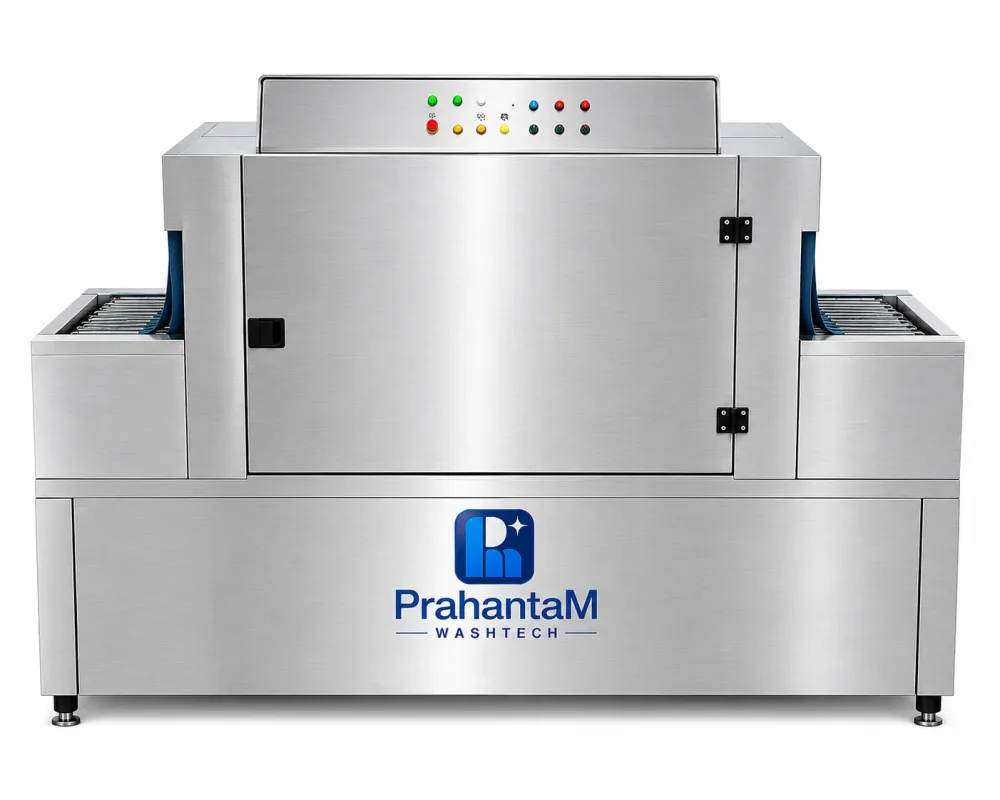
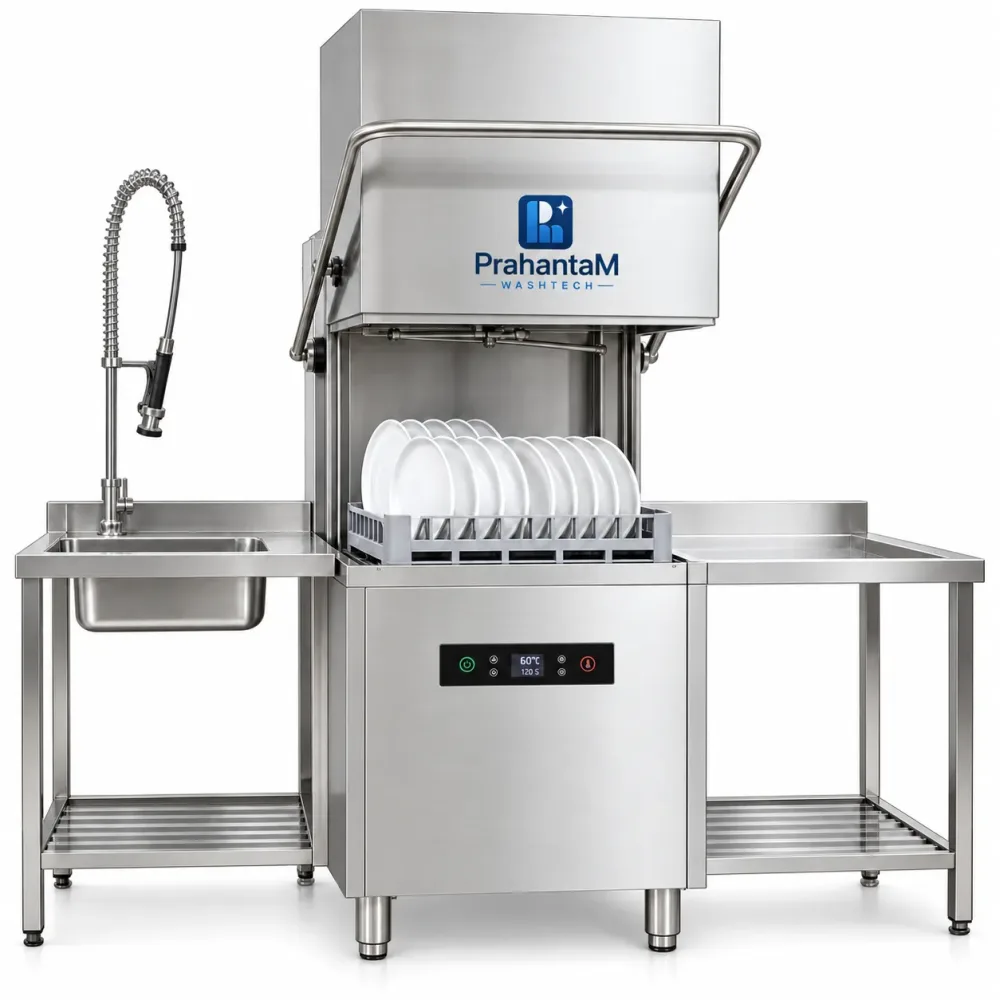
Restaurants, hotel outlets, cloud kitchens and institutional canteens often reach a tipping point where hand washing or small undercounter units cannot keep pace with peak service. The pass-through hood type dishwasher from PM Washtech answers that gap with a familiar rack workflow, stainless commercial construction and high-pressure spray cycles that return plates, bowls, glasses, cutlery and trays quickly without demanding the long linear footprint of a conveyor line.
This buying guide is written for owners, chefs, F&B managers and facility planners in India who need clear, practical criteria before investing in hood dishwashing equipment. You will learn who the machine suits best, how pass-through washing works in real kitchens, how to plan capacity, what utilities and layout matter, and how hood architecture compares to conveyor systems when space is tight. Prahantam manufactures and supports commercial wash equipment from Ahmedabad with installation guidance and a one-year warranty on the hood type dishwasher range.
What a hood type pass-through dishwasher solves
A hood type dishwasher is a batch rack machine with a lift-up hood and a pass-through tunnel. Staff load a standard rack on the dirty side, close the hood, run a timed wash and rinse cycle, then pull the rack out on the clean side without reversing direction through the dining or prep area. That dirty-to-clean separation is one of the strongest hygiene advantages in compact dish rooms.
Unlike conveyor systems that move ware continuously along a long belt path, hood machines process one rack at a time with quick cycle times. For many mid-to-high volume Indian restaurants, the rhythm of load, cycle, unload matches how service actually arrives: waves of covers rather than an endless banquet stream. When those waves are intense but not constant, hood equipment often delivers better space efficiency than floor-hung conveyor lines.
Prahantam hood type dishwashers combine stainless steel wash chambers, high-pressure spray arms and commercial heating to loosen grease, starch and protein soils typical of Indian menus. The machine is built for daily duty in environments where moisture, heat and detergents would quickly degrade light-duty equipment.
Who should shortlist a hood type dishwasher
Hood machines fit kitchens that wash substantial rack volume but cannot allocate ten to fifteen meters of linear conveyor space. Independent restaurants, hotel coffee shops, large cafes, hospital dietary sections, corporate canteens and multi-brand cloud kitchen hubs frequently land in this category. If your stewarding team already thinks in racks per hour rather than individual pieces, hood architecture aligns with existing habits.
Buyers who need one machine to handle mixed ware also benefit. A well-loaded rack can carry plates, bowls, glasses, cutlery baskets and small trays in a single cycle, which simplifies training compared with forcing every item through a single-purpose line. Properties that outgrow a hood later can still keep it as overflow or specialty wash during renovation, so the purchase rarely becomes a dead end.
Hood dishwashers are a weaker fit when peak demand is truly continuous for hours with no natural pause, or when tray and plate volume exceeds what rack cycling can clear even at maximum discipline. In those cases, compare seriously against Prahantam conveyor dishwashing options. The decision should start with measured peak-hour rack demand, not average quiet afternoons.
How pass-through hood washing works
Operation begins with scraping and sorting at a dirty landing table. Staff place ware into a compatible rack, slide the rack into the machine opening, and lower the hood to seal the wash chamber. The cycle typically includes a hot wash stage with detergent injection and a final rinse stage at elevated temperature for thermal sanitizing practice in commercial settings.
High-pressure spray is the core cleaning mechanism. Multiple arms and nozzles direct water from angles that reach cup interiors, plate rims and nested cutlery when loading discipline is good. Quick cycle times mean the hood can reopen for the next rack soon after the previous cycle completes, which is why many kitchens describe hood machines as the sweet spot between manual washing and full conveyor investment.
Pass-through design means the operator does not pull a hot rack back toward the dirty zone. Clean ware exits forward into a dedicated landing area for drying, polishing glasses if needed, and dispatch to service. That one-way flow reduces cross-contamination risk and keeps stewarding movement predictable during rush periods.
Capacity planning for plates, bowls, glasses and trays
Rated throughput on hood dishwashers is usually expressed as racks per hour or equivalent place settings. Treat those figures as planning ceilings, not guarantees every shift will hit them. Actual output depends on soil level, rack loading technique, water temperature stability, detergent quality and how fast clean racks are cleared from the exit side.
Map your busiest sixty minutes of service. Count how many racks of mixed ware you would need if every plate, bowl, glass and cutlery set moved through the machine once during that window. Add margin for banquets, festivals and weekend peaks common in Indian hospitality. If the math shows racks waiting while the hood is still cycling, you either need a second machine, extended pre-scrape efficiency, or a move toward conveyor architecture.
Mixed loading is powerful but has limits. Overstacking glasses behind large trays can shadow spray patterns. Cutlery baskets should sit where arms can reach them directly. Trays with baked-on soil may need longer pre-rinse or a heavier detergent program. Prahantam advisors can help translate your menu mix into realistic rack plans before you lock floor layout.
Hygiene, temperature and daily operating discipline
Commercial hygiene is a combination of heat, chemistry, contact time and process separation. Hood dishwashers support thermal rinse temperatures that help reduce microbial risk on food-contact surfaces when paired with correct wash programs and maintenance. Indian kitchens must also account for variable water hardness, which can affect spotting, scale buildup and heater efficiency over time.
Train staff to keep dirty and clean zones physically separated. Color-coded racks, dedicated cutlery baskets and clear landing tables reduce the chance that a clean rack is stacked on a soiled surface. Daily end-of-shift cleaning of filters, wash tank and door gaskets is not optional cosmetic work; it protects wash quality and extends machine life.
Document simple opening and closing checklists per shift. When every steward knows the same minimum standards, results stay consistent even when the team rotates. Hygiene audits and brand standards are easier to pass when the machine routine is visible and owned, not hidden in one senior employee memory.
Construction, durability and the one-year warranty context
Prahantam hood type dishwashers use stainless steel construction suited to commercial wash environments. Stainless resists corrosion from detergents, food acids and constant moisture better than painted or mild steel alternatives. Hood seals, hinges and spray hardware should tolerate thousands of open-close cycles across a year of service.
The included one-year warranty reflects confidence in manufacturing quality and gives buyers a defined support window for manufacturing defects. Warranty coverage is not a substitute for correct installation, water treatment where needed, or daily care. Treat warranty as one layer in a broader ownership plan that includes preventive maintenance and responsive service from Ahmedabad-based support channels.
Commercial equipment durability also depends on installation quality. A machine that vibrates because of poor leveling, or drains slowly because of incorrect plumbing, will wear faster regardless of metal grade. Budget time for professional commissioning alongside the purchase decision.
Site requirements: power, water, drain and ventilation
Before ordering, confirm electrical supply compatible with the specific hood model, including voltage, phase and available load for electric heating elements. Indian commercial kitchens often run three-phase supply in larger properties but may be limited in smaller standalone restaurants. Your electrician should verify earthing and dedicated circuit protection.
Water inlet pressure and flow must support rapid fill and consistent spray performance. Softened or treated water may be advisable where hardness is high, both for wash quality and for reducing descaling frequency. Floor drain capacity and correct pitch prevent standing water around the machine base, which is both a safety hazard and a hygiene concern.
Steam and heat release when the hood opens after a cycle. Dish rooms need adequate ventilation so staff can work comfortably and moisture does not migrate into dry storage areas. Plan chemical storage for detergent and rinse aid away from food prep but close enough that replenishment happens on schedule, not after a failed wash shift.
Installation, commissioning and staff training
Prahantam provides installation guidance so inlet, drain, power and chemical connections meet commercial expectations. First-run checks should verify wash and rinse temperatures, spray arm rotation, and detergent dosing rates against local water conditions. Skipping commissioning to save a day often costs weeks of inconsistent results later.
Training should cover safe hood operation, rack loading patterns for plates bowls glasses cutlery and trays, recognition of low chemical alarms, and basic troubleshooting such as cleared spray blockages. New hires in stewarding rotate frequently in many Indian outlets; a short visual guide near the machine pays for itself quickly.
Assign a shift owner responsible for machine readiness. Shared equipment with no named owner tends to degrade first on busy nights when everyone assumes someone else checked the tank and filters.
Operating tips that protect throughput and wash quality
Scrape aggressively before loading. Soil that never enters the wash tank is soil the spray arms do not fight during the cycle. Do not overload racks in ways that block nozzle lines of sight. Alternate tall and short items where possible so water can circulate.
Monitor results during service, not only at closing. Sudden spotting or greasy film often traces to rinse aid levels, water quality changes, or scaled nozzles before it traces to a major mechanical failure. Keep spare wash arms or nozzle cleaning tools accessible so minor blockages are fixed in minutes, not hours.
Align detergent choice with menu soil. Kitchens heavy on ghee, curry and fried items may need different chemical attention than bakery-focused plate mixes. Your chemical supplier and Prahantam support can recommend practical starting points, but on-site observation during peak service is the final judge.
Ownership cost beyond the purchase invoice
Total cost includes electricity for heating, water consumption, chemicals, stewarding labor, downtime risk and maintenance visits. Hood machines can reduce labor compared with manual three-sink washing when rack discipline is strong, but they still require staffed loading and unloading every cycle.
Compare hood ownership against outsourcing ware washing or running multiple small undercounter units. Multiple small machines can increase total utility draw and maintenance points while still failing to clear peak racks. One correctly sized hood often simplifies the dish room economically and operationally.
Budget preventive maintenance for descaling, gasket replacement and periodic technician inspection. Ahmedabad manufacturing support means spare parts and service conversations stay oriented toward Indian operating realities rather than distant import-only supply chains.
Hood type vs conveyor when footprint is tighter
Conveyor dishwashers excel when ware must move continuously through a long tunnel for hours without stopping. They reward kitchens with linear space and truly nonstop volume. Hood type dishwashers excel when the same volume arrives in intense but cyclical bursts and floor length is limited.
If your dish room cannot accommodate dirty landing, conveyor body and clean exit in one straight line without blocking fire routes or cold storage access, hood pass-through architecture is often the pragmatic choice. You trade continuous feed for a smaller footprint and simpler mental model for staff.
Some large hotels run both: conveyor for banquet plate volume and hood lines for outlet-specific ware or overflow during conferences. Prahantam catalog breadth supports that ecosystem thinking instead of forcing one machine type to handle every soil and every volume curve.
Why PM Washtech for hood dishwashing in India
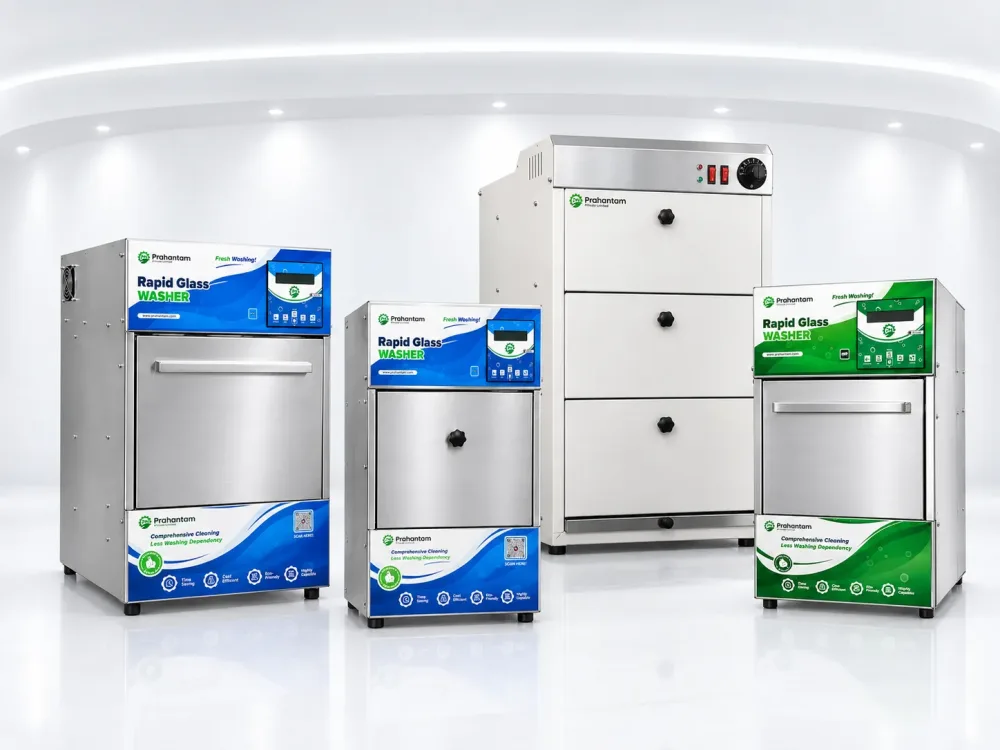
Prahantam builds commercial dishwashers and glass washers for Indian hospitality conditions: hard water in many cities, dense peak covers, rapid staff turnover and the need for responsive local support. Hood type machines reflect that focus with stainless construction, high-pressure wash design and practical documentation for site planning.
Manufacturing and support rooted in Ahmedabad shorten the distance between your operational problem and the team that understands the equipment. Model selection, installation guidance and maintenance orientation are part of the purchase conversation, not an afterthought once the machine is already squeezed into a corner.
Buyers comparing imported brands should weigh not only brochure specifications but also who answers the phone when a Saturday wedding buffet depends on the hood completing cycles on time. Local build and support often decide total satisfaction more than a marginal spec difference on paper.
Practical buying checklist before you confirm a hood machine
Measure peak-hour rack demand during your busiest service window. Confirm available pass-through space for dirty entry and clean exit without cross-traffic. Verify electrical phase, load and earthing with a qualified electrician. Assess water hardness and plan treatment if needed. Define detergent and rinse-aid supply and storage. Identify shift owners for daily cleaning and weekly inspections. Compare hood capacity against conveyor options if volume is borderline. Request installation guidance and staff training as part of commissioning. Confirm warranty terms and service contact paths for your location.
Treat the hood dishwasher as a production asset tied directly to guest experience. Slow or inconsistent washing shows up as delayed courses, unhappy stewarding teams and failed hygiene audits even when the front of house looks perfect.
Next step: pricing and site discussion with Prahantam
If your kitchen is outgrowing manual washing or an aging hood machine, share your outlet type, peak rack estimate, menu soil profile and utility details with PM Washtech. The team can help validate hood type fit, contrast conveyor alternatives when footprint allows, and provide commercial pricing guidance through WhatsApp or phone.
A pass-through hood dishwasher correctly specified and correctly run keeps mixed ware moving through the dish room with the speed and hygiene commercial service demands. That is the role Prahantam hood type equipment is built to play in busy Indian kitchens.