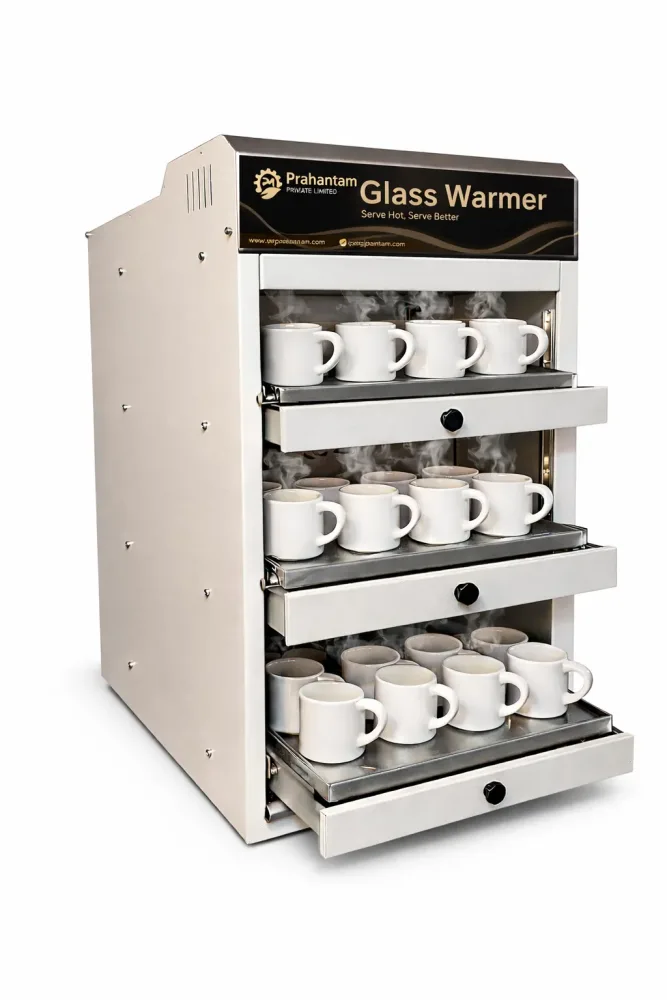
Hot beverages taste different in a cold cup. Guests notice instantly when chai, filter coffee or espresso loses temperature to a chilled mug pulled from an open shelf. The Prahantam electric cup and glass warmer keeps service ware at roughly 70 to 80 degrees Celsius on the counter, ready for pour, with SS304 construction, fully automatic operation, 220V 50Hz supply typical in India, and a six-month warranty for commercial countertop deployment.
This guide helps cafe owners, hotel pantry managers, office facility teams and tea stall operators decide when a cup warmer belongs in the service line, how temperature holding affects guest experience and safety, what electrical and placement requirements apply, and how ownership compares with ad hoc hot-water rinsing. PM Washtech manufactures and supports the unit from Ahmedabad.
What an electric cup warmer solves at the pass
Pre-heated cups reduce initial heat shock that steals drink temperature before the guest takes a first sip. Baristas and chai makers gain predictable handoff time because cups sit in a dedicated warming zone instead of scattered near steam wands or kettles inconsistently.
Fully automatic countertop design means staff focus on beverage preparation while the warmer maintains holding temperature within its designed band near 70 to 80 degrees Celsius for food-safe hot service context when used as directed.
SS304 stainless construction resists corrosion in steamy, wet service environments better than painted or thin consumer warmers marketed for home use.
Who should install a Prahantam cup warmer
Specialty coffee counters, hotel club lounges, executive floor pantries, premium tea houses, hospital hospitality corners serving hot drinks, airline lounges, and corporate cafes with visible beverage quality standards. Also consider high-volume chai stalls where cup temperature consistency supports brand repeat visits.
Low-volume sites that serve mostly cold drinks may defer purchase until hot beverage revenue justifies counter space and power draw.
Properties serving primarily takeaway paper cups need different equipment; this guide targets reusable cups and glasses warmed before fill.
How automatic cup warming works
Electric heating elements raise and maintain internal chamber or plate temperature per product design. Fully automatic control reduces manual thermostat fiddling across shifts with different staff experience levels. Cups or glasses placed in the warming zone absorb heat until service.
220V 50Hz compatibility aligns with standard Indian single-phase supply in many small commercial installs, subject to nameplate verification by your electrician before purchase.
Warming is holding, not washing. Cups must arrive clean and dry enough for safe hot holding; the warmer is not a substitute for glass washers or sanitizing sinks.
Temperature band 70 to 80 degrees Celsius in service context
Holding near 70 to 80 degrees Celsius supports hot fill comfort and perceived quality when cups are loaded correctly and not overfilled with cold rinse water beforehand. Train staff to empty rinse water fully before warming.
Guest safety matters: warn staff about hot surfaces, use tongs or heat-safe gloves where SOP requires, and position the unit away from guest reach in self-service areas unless shielded.
Document holding practices if your brand audit covers beverage service temperature consistency.
Capacity planning and counter workflow
Size the warmer against peak simultaneous hot drinks plus buffer for rinse and pour time. During morning chai rush, insufficient warmed cup inventory creates the same queue as an slow espresso machine.
Stage clean cups from wash area to warmer in one direction flow. Do not return used cups to the warmer without washing.
Pair with Prahantam glass washers or PC02 class equipment upstream so warm cups are also hygienically clean, not only hot.
Hygiene and cross-contamination control
Warming does not kill pathogens on dirty cups. Maintain wash discipline before warming. Wipe exterior spills on warmer housing daily to prevent sticky buildup attracting pests in open cafes.
Six-month warranty covers manufacturing defects in the defined period; hygiene outcomes still depend on operator process separate from warranty terms.
Site requirements: power, ventilation and placement
Confirm dedicated 220V 50Hz circuit capacity with electrician, including earthing. Allow rear or side clearance for ventilation per manual. Place on stable, heat-tolerant counter away from water splash directly into electrical areas while respecting wet service realities with appropriate positioning.
Cable routing must not create trip hazards in narrow tea stall counters.
SS304 construction and commercial durability
SS304 suits food-adjacent equipment exposed to moisture and cleaning chemicals. Avoid abrasive scouring that scratches finish and harbors soil visually.
Commercial duty cycles exceed home warmers that fail when run all day seven days a week during Indian summer heat and monsoon humidity combined.
Operating tips for cafes and hotels
Preheat before rush, not after queue forms. Rotate cups so oldest warm ware serves first if holding time limits exist in internal policy.
Do not stack cold wet cups; they pull chamber temperature down and extend recovery time unpredictably.
Switch off during extended closure per energy policy while respecting restart preheat in opening checklist.
Ownership cost and six-month warranty context
Capital cost is modest compared with beverage revenue protected by consistent quality. Operating cost is primarily electricity for continuous holding during service hours.
Six-month warranty provides defined manufacturing support window; register purchase details and service contacts from Prahantam Ahmedabad for smooth claims if needed.
Compare ownership against staff habit of using steam wand to heat cups, which slows espresso workflow and may violate brand barista standards.
Cup warmer vs hot water dip practices
Hot water dips consume water, create splash hazards, and vary temperature cup to cup. Dedicated warmers standardize results and free sink space for actual washing through glass or dish equipment.
Some legacy tea stalls resist change until side-by-side taste tests convince owners guests stay longer with hotter perceived serve.
Why PM Washtech for cup warming in India
Prahantam bundles cup warming with broader commercial wash and bar equipment thinking, supporting buyers building coherent beverage stations from Ahmedabad manufacturing base.
Local support responsiveness matters when a morning rush depends on a countertop asset, not only on large kitchen lines.
Pairing with wash equipment upstream
Warming hides neither lipstick nor stale milk residue. Sequence should be wash on PC02 or PB02 class glass equipment, air dry or drain briefly, then warm before fill. Skipping wash and only warming creates a hospitality liability disguised as premium service.
Hotel club floors sometimes install cup warmer beside small glass washer in pantry closet layouts. Measure combined heat load and ventilation so neither unit suffocates the other during continuous afternoon service.
Energy use and shift scheduling
Holding 70 to 80 degrees Celsius during closed hours wastes power. Build warmer preheat into opening checklist fifteen to twenty minutes before first hot beverage service unless manual specifies otherwise for your model. Close shift shutdown should appear on stewarding clipboard next to hood and glass washer tasks.
Guest perception and beverage margin protection
Hot beverage margin depends on repeat orders and premium pricing justified by experience. Cold cups signal carelessness even when beans or tea leaves are high grade. Cup warmer investment is small relative to monthly beverage revenue in cafes that already track average ticket contribution from drinks.
Hotel loyalty members notice club lounge details. Consistent cup temperature supports quiet satisfaction scores that never appear in comment cards but show in return booking patterns over quarters.
Cup types: ceramic, glass and double-wall considerations
Thick ceramic absorbs heat differently from thin glass tasting cups. Train staff on maximum safe load per cycle zone so recovery time stays predictable when switching cup types during mixed service.
Double-wall glasses may not benefit from traditional warming the same way single-wall service ware does. Maintain a short list of items approved for warmer use to avoid warping or thermal stress damage on specialty retail cups.
220V 50Hz installation notes for small sites
Tea stalls and kiosks sometimes share circuits with lighting and signage. Electrician should verify voltage stability when signage LED loads flicker during evening hours. Cup warmer holding band near 70 to 80 degrees Celsius depends on stable supply more than staff realize.
Extension cords are temporary fix only; permanent install deserves fixed outlet within arm reach without trip hazard across customer queue lane.
Retail and franchise rollout consistency
Franchise brands fail when one city outlet skips warmer while others use it. Include warmer preheat and shutdown in opening manual for every licensed location. Ahmedabad support from Prahantam helps corporate teams standardize countertop equipment spec sheets for new store packages.
SS304 care and countertop life
SS304 exterior wipes clean with mild detergent and soft cloth. Avoid chloride-heavy cleaners that streak or pit over months. Cup warmer sits in guest-visible zones in many cafes; cosmetic care affects brand perception as much as mechanical care affects temperature stability.
Fully automatic control reduces thermostat tampering but supervisors should still verify holding band near 70 to 80 degrees Celsius quarterly with calibrated probe spot checks during brand audits.
Six-month warranty and post-warranty planning
Six-month warranty defines initial manufacturing support window. Before expiry, run performance check and document results. If recovery time lengthens or hot holding band drifts, initiate service conversation while history is fresh rather than after failure on peak winter menu day.
Buying checklist before ordering
Estimate peak hot cups per hour. Measure counter space and verify 220V 50Hz circuit. Plan wash-to-warm workflow. Train staff on safety and hygiene. Confirm six-month warranty terms. Request pricing via WhatsApp or phone from Prahantam.
Commercial countertop footprint and SS304 branding
Fully automatic countertop cup warmer should sit where guests see intentional quality investment, not hidden under stairs. SS304 finish communicates durability aligned with Prahantam commercial wash equipment nearby when cafe builds unified stainless language at service counter.
Six-month warranty period is ideal for staff habit formation; use it to lock preheat discipline before warranty expires and attention drifts.
Morning rush choreography with warmer and washer
Peak chai hour needs warmed cups waiting before first customer, not cold cups entering warmer while queue forms. Preheat checklist item should appear thirty minutes before posted open time, linked to glass washer completion so cups are clean before warm hold.
Stack warmed cups only in approved heat-safe holder; direct contact with cold marble counter steals heat before pour and defeats purpose of 70 to 80 degrees Celsius holding investment.
Next step: pricing and placement advice
Share outlet type, cup sizes, peak hot beverage count and counter photos with PM Washtech for cup warmer fit confirmation and commercial pricing through WhatsApp or phone.
Hot drinks deserve hot cups. The Prahantam electric cup warmer makes that standard automatic instead of optional.