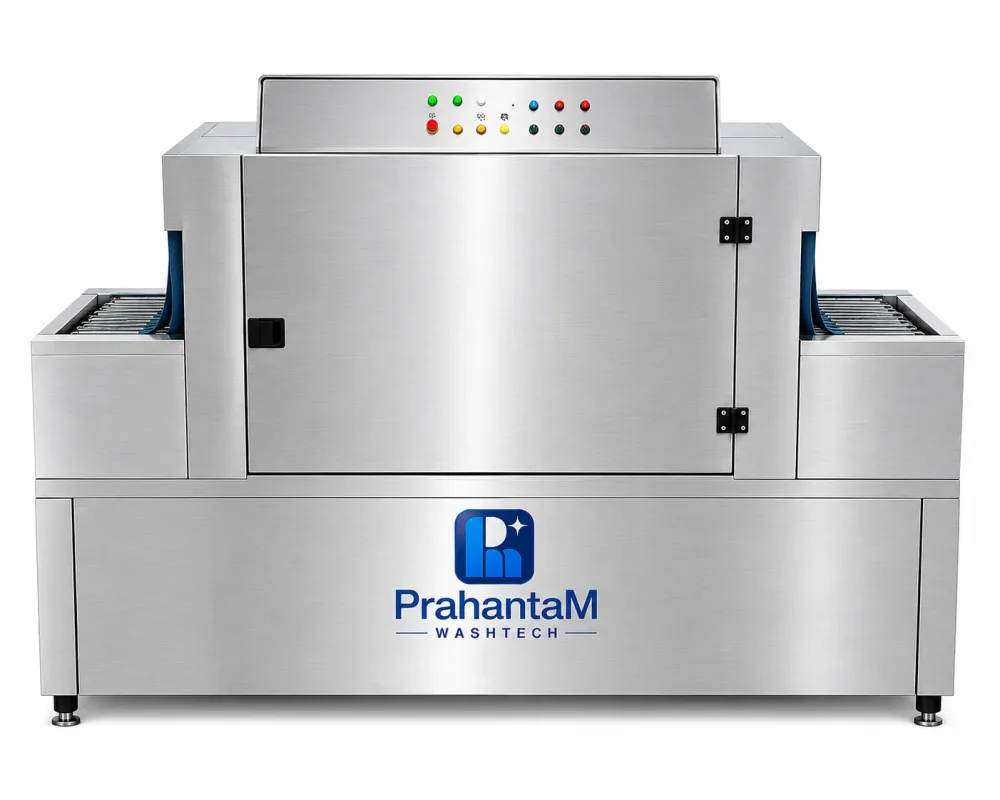
High-cover hotels, banquet kitchens, institutional canteens and large restaurants rarely fail because of cooking capacity alone. They stall when the wash area cannot return clean plates, trays and utensils at the same pace service demands. The Prahantam Conveyor Type Dishwasher PMW001 is built for that exact pressure point: continuous automatic washing that keeps a dirty-to-clean flow moving without the stop-start rhythm of batch machines.
This guide explains when a conveyor dishwasher is the right choice, how the PMW001 works in real Indian commercial kitchens, what site conditions matter before purchase, and how teams can run the machine for consistent hygiene and lower operating friction. The goal is practical decision support for owners, chefs, F&B managers and facility planners who need clarity before investing in high-volume wash equipment.
What a conveyor type dishwasher actually solves
A conveyor dishwasher is a continuous-feed system. Soiled ware enters one side on a moving conveyor, travels through wash and rinse zones, and exits the other side ready for sorting and service. Unlike an undercounter or hood machine that waits for a full rack, closes, runs a cycle and then opens again, a conveyor line keeps accepting load as long as the kitchen can feed it.
That difference matters when covers climb quickly during breakfast rushes, wedding buffets, conference lunches or hospital meal turns. In those settings, wash delay creates tray backlogs, wet landing tables, delayed plate-ups and overtime for stewarding staff. A well-specified conveyor machine reduces that bottleneck by converting dishwashing into a steady production process instead of a sequence of interrupted batches.
The Prahantam PMW001 is positioned for kitchens that need this continuous rhythm and want commercial construction, thermal rinse hygiene and automatic chemical dosing in one floor-mounted package. It is not a compact cafe machine. It is a workhorse for volume-first operations where the wash station must match the pace of the pass.
Who should shortlist the PMW001
Choose a conveyor dishwasher when daily plate movement is high enough that rack machines create queues. Typical buyers include multi-outlet hotels, large restaurants with continuous seating, catering commissaries, banquet facilities, industrial canteens, hospital dietary kitchens and institutional dining halls. If your stewarding team already works in a line flow with separate dirty landing, wash and clean dispatch zones, a conveyor fits the existing choreography.
It is also a strong option when hygiene standards demand a hot final rinse and when management wants fewer manual variables in detergent and rinse-aid dosing. Automatic dosing helps reduce under-dosing that leaves soil and over-dosing that wastes chemicals and leaves residue. For teams that rotate staff across shifts, fewer manual steps usually means more consistent results from one service to the next.
If your kitchen washes fewer racks per hour and has limited floor length, a hood-type or undercounter machine may still be the better footprint match. Conveyor systems reward volume and linear space. The buying decision should start with true peak-hour demand, not average quiet periods.
How continuous washing works on the PMW001
The operating idea is simple: load, convey, wash, rinse, unload. Staff place plates, trays and suitable utensils onto the conveyor path. The machine moves ware through high-pressure spray zones designed to reach surfaces from multiple angles. A final rinse stage then applies elevated temperature water for thermal sanitization before items exit for drying and stacking.
On the PMW001, wash water is typically held in the 55–65°C range to loosen grease and food soil, while the final rinse targets 82–85°C. That hot rinse is important for commercial hygiene because heat helps reduce microbial risk on food-contact surfaces when used with correct wash chemistry and machine maintenance. The continuous conveyor means the kitchen does not pause between racks to open doors or reset cycles; the line keeps progressing as long as loading remains steady.
Automatic detergent and rinse-aid dosing supports that flow. Instead of asking every steward to measure chemicals by eye, the machine can apply product in a more repeatable way across the shift. Combined with SS304 stainless construction, the package is designed for daily commercial duty rather than occasional light use.
Capacity planning: reading “800 to 2,500 plates per hour” correctly
Rated capacity is a planning number, not a promise that every kitchen will hit the same output every minute. Throughput depends on plate size, soil level, conveyor speed settings, loading discipline and how quickly clean ware is cleared at the exit. A kitchen loading heavily soiled banquet plates will not match the same pace as a team loading lightly soiled lunch plates with good scraping upstream.
Use the 800 to 2,500 plates per hour figure as a commercial reference for high-volume planning. Then validate against your peak service window. Ask: how many plates, bowls, trays and side items leave the dish pit during the busiest 60 minutes? How many stewarding staff can scrape, sort and load without creating a second bottleneck before the machine? How much clean landing space exists after the exit so finished ware does not pile back into the wash zone?
Strong capacity planning looks at the whole wash cell. The machine is only one station. Scraping tables, pre-rinse, chemical storage, clean rack parking and circulation paths all affect whether rated speed becomes real output. Prahantam’s team can help translate your menu mix and cover count into a practical configuration conversation before you finalize purchase.
Hygiene, temperature and kitchen compliance expectations
Commercial kitchens are judged not only on speed but on whether ware returns visually clean and hygienically safe. The PMW001’s elevated final rinse temperature supports thermal sanitizing practice in high-turnover environments. Pair that with correct detergent choice for local water conditions, routine filter cleaning and scheduled descaling where hardness is high.
Indian kitchen water quality varies widely by city and even by locality. Hard water can leave spots, reduce chemical efficiency and build scale on heating elements and spray systems. A buying conversation should include water hardness checks, possible treatment needs and rinse-aid strategy. Ignoring water quality is one of the fastest ways to blame a machine for results that actually start in the supply line.
Hygiene also depends on staff habits: scraping before loading, avoiding overloaded conveyors that shadow spray patterns, and keeping clean and dirty zones separated. Equipment can support process discipline; it cannot replace it. Training during commissioning is therefore as important as the hardware specification sheet.
Construction, durability and daily commercial reality
The PMW001 uses heavy-duty SS304 stainless steel for wash-facing construction suited to commercial kitchens. Stainless matters because dishwashing areas see heat, moisture, detergents, food acids and constant mechanical contact. A machine built for hotel and institutional duty should tolerate that environment without rapid corrosion or flimsy panel fatigue.
Floor-mounted installation also reflects the intended use case. Conveyor dishwashers are production assets. They need stable positioning, clear service access and enough surrounding space for loading and unloading without crowding fire exits or cooking aisles. When planners treat the dishwasher as an afterthought squeezed into leftover space, both safety and productivity suffer.
Durability is not only metal thickness. It includes accessible maintenance points, predictable spare support and clear operating controls. A digital touch control panel helps teams standardize programs instead of relying on informal tribal knowledge passed between shifts. That consistency protects both wash quality and machine life.
Site requirements before you approve the purchase
Before ordering, confirm three utilities and one layout truth. First, electrical supply: the PMW001 is specified for 415V AC, 3 phase, 50 Hz with electric heating. Your electrician should verify available load, cable routes, isolation points and earthing. Second, water inlet capacity and temperature stability should match commercial wash demand. Third, drain design must handle continuous discharge without flooding neighboring stations.
The layout truth is linear flow. Conveyor machines work best when dirty ware enters from one direction and clean ware leaves in another without crossing paths. If stewards must carry clean plates back through the dirty zone, contamination risk and labor waste rise immediately. Involve the kitchen designer early, not after the machine has already been purchased against an incomplete drawing.
Also plan chemical storage, ventilation around heat and steam, and safe clearance for service technicians. A machine that cannot be accessed for maintenance becomes expensive faster than one that was installed with service space from day one.
Installation and commissioning that protect performance
Good installation is part of wash quality. Leveling, correct inlet connections, drain pitch, chemical lines and first-run parameter checks all influence whether the machine performs to expectation. Prahantam provides installation guidance so power, water, drain and detergent connections are handled with commercial discipline rather than improvised fittings.
Commissioning should include staff walkthroughs: how to start and stop safely, how to recognize low chemical conditions, how to clear common jams, which soil types need better scraping, and what daily cleaning closes the shift. A short training investment at the beginning prevents months of inconsistent results and unnecessary service calls.
Ask for a simple opening checklist and closing checklist tailored to your kitchen. When those habits become routine, the dishwasher remains a stable production tool instead of a mystery box that only one senior steward understands.
Operating tips that improve output without stressing the machine
Scrape aggressively before loading. Food residue that never enters the wash tank is residue the spray arms do not have to fight. Keep spray nozzles clean and inspect arms on a defined schedule. Do not overload the conveyor to the point where ware shadows neighboring items from spray contact. Clear the clean end quickly so finished plates do not cool into a cluttered exit zone.
Match chemistry to soil and water. Banquet kitchens with heavy gravy soils may need different detergent attention than bakery plate rounds with starch films. Monitor rinse quality visually during service, not only at the end of the night. If spotting increases suddenly, check rinse aid, water changes and scale before assuming a mechanical failure.
Assign ownership. One supervisor per shift should be accountable for machine readiness, chemical levels and basic cleaning. Shared responsibility with no named owner usually becomes nobody’s responsibility during peak pressure.
Ownership cost: looking beyond the invoice
The purchase price is only the first line in total cost of ownership. Energy for heating, water volume, detergent consumption, stewarding labor, downtime risk and service response all shape the real yearly cost. A conveyor machine can reduce labor intensity by stabilizing throughput, but only if loading is organized and utilities are efficient.
Compare options using a peak-hour labor model. How many stewarding hours are currently spent fighting wash backlog? What is the cost of delayed banquet turnovers or late room-service ware? When those delays are frequent, a higher-capacity machine may pay for itself through recovered service speed and fewer emergency overtime hours.
Also budget for preventive maintenance. Descaling, gasket checks, arm cleaning and periodic technician visits are cheaper than emergency breakdowns during a sold-out weekend. Prahantam’s maintenance support orientation is designed around keeping kitchens productive, not only delivering equipment to the loading dock.
Conveyor vs hood-type: choosing the right architecture
Hood-type dishwashers remain excellent for many restaurants because they offer strong rack washing with a smaller linear footprint and familiar pass-through handling. They are often ideal when volume is high but not continuous enough to justify a full conveyor line. Conveyor machines win when the kitchen needs nonstop flow and has the floor length to support dirty-to-clean progression.
A practical way to decide is to map your busiest 30 minutes. If racks are constantly waiting for a hood machine to finish, and staff are stacking soiled ware into overflow, conveyor architecture deserves a serious look. If volume arrives in waves with natural pauses, a hood-type machine may deliver better space efficiency.
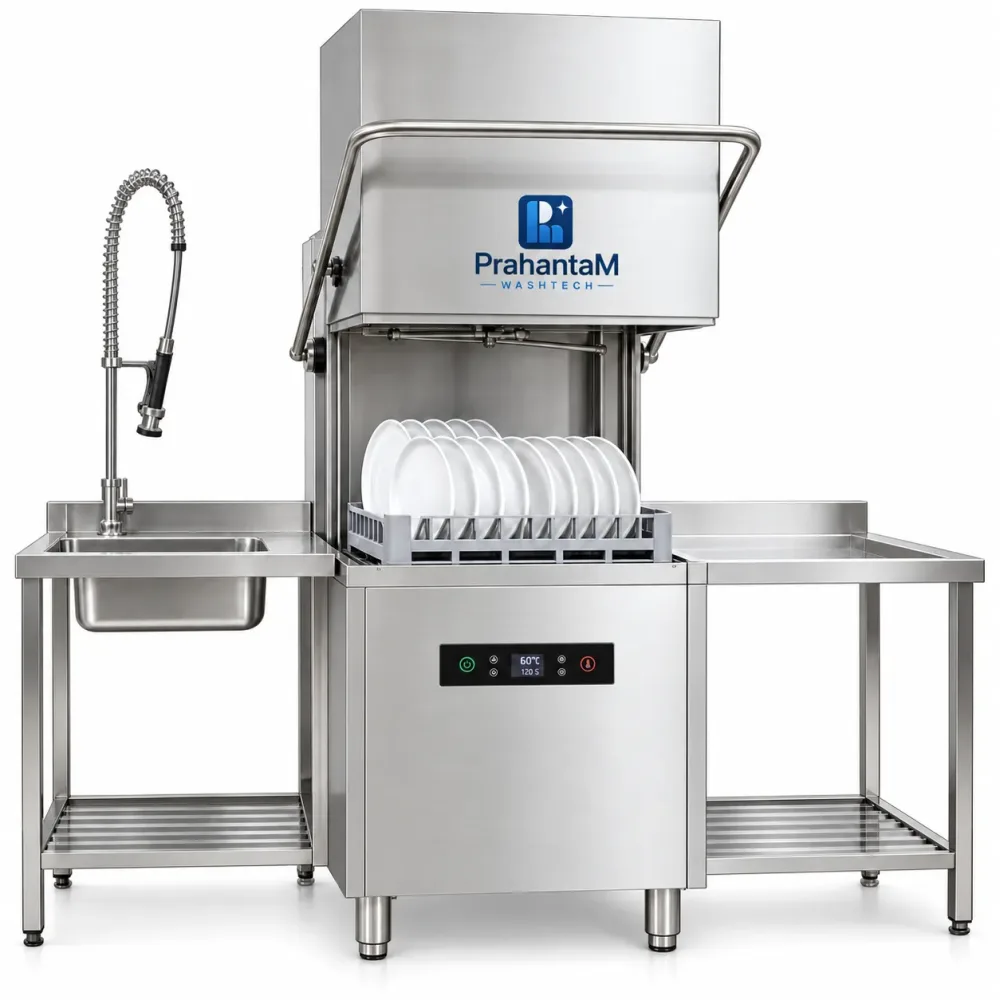
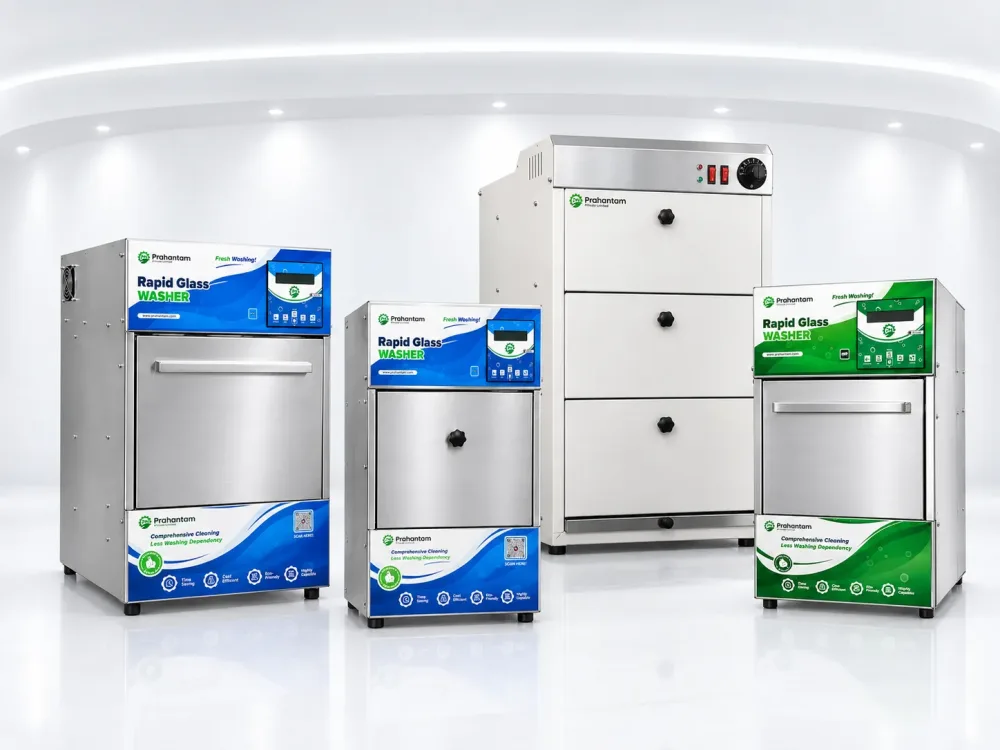
Some large properties use both: conveyor lines for plate and tray volume, plus specialty machines for glassware or delicate items. Prahantam’s broader catalog, including hood-type dishwashers and glass washers, lets kitchens build a wash ecosystem instead of forcing every item through one unsuitable process.
Why Prahantam for high-volume dishwashing in India
PM Washtech builds commercial washing equipment with Indian hospitality conditions in mind: real kitchen heat, variable water, dense service peaks and the need for practical after-sales guidance. The PMW001 combines continuous conveyor operation, high-pressure wash coverage, hot final rinse capability, automatic chemical dosing and SS304 construction in a package aimed at professional stewarding environments.
Just as important is the support path around the machine. Model selection guidance, installation assistance and maintenance support help reduce the gap between brochure specifications and day-two reality. For buyers comparing imported badges against local service responsiveness, that support path often becomes the deciding factor once the kitchen is live.
Prahantam’s focus on commercial glass washers and dishwashers also means the conversation stays specialized. You are not adapting a generic industrial washer to hospitality needs. You are selecting from equipment intended for bars, restaurants, hotels, cloud kitchens and canteens that share similar hygiene and turnaround pressures.
A practical buying checklist before you confirm PMW001
Confirm peak-hour ware count and item mix. Measure available linear space for dirty landing, machine body and clean exit. Verify 415V three-phase availability and drain capacity. Test or estimate water hardness and plan treatment if needed. Decide detergent and rinse-aid supply arrangements. Identify who will own daily cleaning and weekly inspections. Request installation guidance and staff training as part of commissioning. Compare conveyor needs against hood-type alternatives if footprint is tight. Align purchase timing with kitchen renovation or outlet opening so utilities are ready before delivery.
Finally, treat the dishwasher as a service asset, not only a steel purchase. The right machine protects guest experience by returning clean ware on time, protects staff by reducing chaotic backlog work, and protects management by making hygiene outcomes more repeatable across shifts.
Next step for kitchens ready to evaluate the PMW001
If your operation is fighting wash queues, planning a high-cover outlet, or upgrading an aging dish room, the Prahantam Conveyor Type Dishwasher is worth a detailed site discussion. Share your kitchen type, average covers, peak plate volume and available utility details. The Prahantam team can help you validate fit, clarify configuration expectations and provide commercial pricing guidance through WhatsApp or phone.
High-volume hospitality does not forgive slow dishwashing. A continuous conveyor line, correctly specified and correctly run, keeps the back-of-house as disciplined as the front-of-house guest promise. That is the role the PMW001 is built to play in busy Indian commercial kitchens.